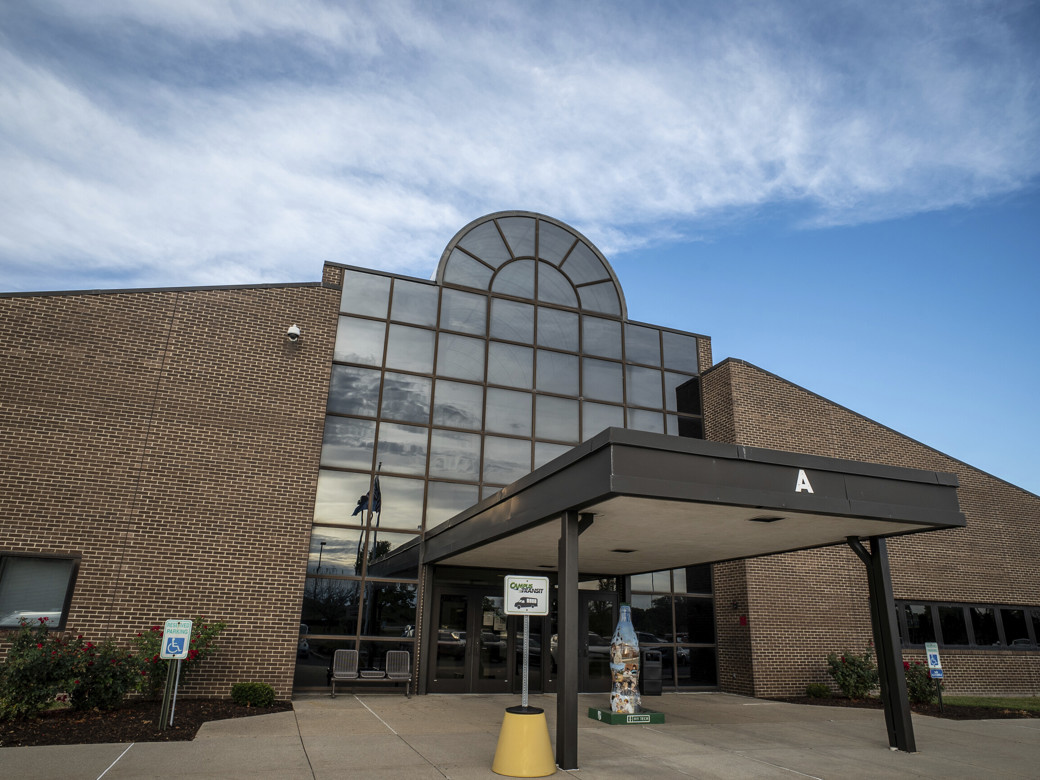

From firefighting and criminal justice to social work and legal services, Ivy Tech Community College students are serving their communities across the state.
With about 1,500 graduates per year in five different programs, the Ivy Tech School of Public Affairs and Social Services is dedicated to community engagement.
At campuses throughout Indiana, Ivy Tech students are serving their communities while getting the education needed for their careers through partnerships with local nonprofit organizations and projects focused on social issues like domestic violence or substance use.
As we recognize the School of Public Affairs and Social Services this month, we share some stories of the impact the work has on local communities.
Experiencing their perspective
In what was once a simple classroom, students, police officers, and social workers now train in highly realistic scenarios that will test their reaction, judgement, and stress management skills.
The Multiple Interactive Learning Objectives (MILO) System at the Ivy Tech Muncie campus is a tool that provides invaluable experience to both students and community partners, Vice Chancellor of Workforce Partnerships and Economic Impact Jennifer Skene said.
The system is used by students in several programs, including for those going into human services, social work, and law enforcement, but it is also regularly used by officers already working in area police departments for ongoing training.
More than five years ago, Ivy Tech partnered with the Ball State University Police Department when researching simulation systems, starting with firearms instructors and now expanding to all of their instructors, Ball State University Police Department Lt. Anthony “Tony” Hurst said.
Officers can work on consistency, deescalation, defensive tactics, and reactions, among many other skills, he said.
“There are a lot of things we can do, from as simple as watching how officers respond to gauging their response time, heart rate and stress response,” Hurst said.
That partnership also benefits Ivy Tech students who get a chance to meet and interact with local police, discussing real-life experiences they have had and how they responded
and giving them an inside perspective they wouldn’t have otherwise had, said Holly Hudson, Associate Professor and Academic Advisor.
You hear people question why an officer made a decision, and it’s easy to make those armchair decisions when you’re not in the moment. With this system, we can stop a scenario in that spot and talk about it.
– Holly Hudson, Associate Professor and Academic Advisor
And students can experience scenarios they could encounter once they enter their career fields, including community members struggling with mental health issues or dementia, Hudson said.
The experience is unlike anything they could ever learn in a classroom, said Elke Grogg, Dean of the School of Arts, Sciences and Humanities.
“The students get hands-on experience most people cannot offer, they can see it, feel it, experience it,” Grogg said.
Exposure to help solidify interest
On the Fort Wayne campus, Timothy Fulk, Program Chair for Criminal Justice and Homeland Security & Public Safety, is implementing many new ways to help young students understand the opportunities offered in the public safety area.
The campus has seen nearly 40% growth in the program in the last year in their dual credit student population.
New requirements from the Indiana State Police and other law enforcement agencies require recruits to have earned 60 college credits for entry level roles, which aligns well with Ivy Tech’s associate degree programs, Fulk said.
Fort Wayne is experiencing more law enforcement presence on campus with the goal of eventually recruiting the next generation of law enforcement professionals.
“The best part of my job is helping to build the next generation of criminal justice professionals. I really like to bring students to campus, give them real perspectives on what they might encounter, raise their professionalism expectations, and help them understand why all of this is important. It’s a bonus when we can share this with younger students who are still making choices about what comes next,” says Fulk.
In April, Fulk is hosting a criminal justice day for dual credit students to be able to visit the campus, learn more about careers, and have a fun experience. They will be able to participate in a physical fitness test using Indiana Law Enforcement Academy standards, process a simulated crime scene in groups from each school, join a situational awareness simulator scenario, and visit a career fair.
The Fort Wayne campus is also hosting an academic competition for its criminal justice dual credit students where they will complete a problem-solving exercise for an opportunity to win scholarship money to continue their studies with Ivy Tech after high school graduation; $5,000 will be awarded for first place, $3,000 for second place, and $2,000 for third place.
Fort Wayne is also hosting a law enforcement mental health training seminar in April, which is focused on the other end of the student spectrum by providing a slimmed down version of crisis intervention training for local law enforcement.
The military connection
Last year, Ivy Tech, the U.S. Army Recruiting Command, and the Indiana Army National Guard partnered to establish the nation’s first Enlisted Training Corps (ETC) program. The goal is to introduce students to meaningful career opportunities in military and public service.
Program participants complete a course taught by Army instructors and learn about the benefits of military and public service, military history, military customs and courtesies, physical fitness requirements and ethical behavior and decision-making. Those who complete the program and earn an associate degree with Ivy Tech will have the opportunity to enlist in the Army at the E-4 pay grade – the highest rank available for junior enlisted recruits and a 30% pay increase over the standard entry level.
Showing students the experience they can gain in the military is an important career pathway, said Matthew Marshall, an instructor with the School of Health Sciences and Public Affairs in Sellersburg.
His goal is to show students the skills they learn in the military are similar to any other career in public service. For example, when his students toured the National Guard armory in New Albany, they worked through a tabletop exercise that focused on the response to a powerful tornado.
They saw how National Guard members work side-by-side with local emergency responders, and how that experience could help them prepare for a future career in public safety, Marshall said.
“It doesn’t matter what uniform you’re wearing; you’re all kind of doing the same thing,” he said.
Creating compassionate, competent professionals
On the Evansville campus, the human services program continues to forge new opportunities for students to help their communities.
Renee Rockers, MSW, LCSW, Associate Professor and Program Chair of Human Services, says that six students have already secured full-time employment offers directly from their internship sites before their May graduation.
“Allowing students to participate in two internships in our associate programs is huge. I can’t emphasize it enough. Bachelor’s program students often don’t have an opportunity to do an internship until senior year. Our students are out in the field in their second year and it’s a big differentiator for Ivy Tech,” says Rockers.
Kendall Givens, an Evansville human services student, was one of a team of students who played critical roles in a collaborative street outreach initiative, partnering with three local outreach teams to visit 14 locations ahead of an impending winter storm.
Together, they helped secure safe shelter for nearly 20 individuals in Evansville who are experiencing homelessness, while providing transportation, personal belongings, storage, and connections to supportive services.
“Being able to help people is eye-opening and incredibly humbling,” says Givens. “Being a part of public services at Ivy Tech has changed my life. This college doesn’t make you feel ashamed for who you are. I am accepted for who I am here and now I get to give that back to other people in need.”
About Ivy Tech Community College
Ivy Tech Community College is Indiana's largest public postsecondary institution and the nation's largest singly accredited statewide community college system, accredited by the Higher Learning Commission. Ivy Tech has campuses throughout Indiana and also serves thousands of students annually online. It serves as the state's engine of workforce development, offering associate degrees, long- and short-term certificate programs, industry certifications, and training that aligns with the needs of the community. The College provides a seamless transfer to other colleges and universities in Indiana, as well as out of state, for a more affordable route to a bachelor's degree.